When you click on links to various merchants on this site and make a purchase, this can result in this site earning a commission. Affiliate programs and affiliations include, but are not limited to, the eBay Partner Network.
So I have a coolant leak coming from the back of my 2002 Saturn sl2 with a 1.9 and I thought the leak was coming from the hose connected to this pipe, I’m not sure what this pipe is called but I’d like to replace it before it gets worse, any help is appreciated
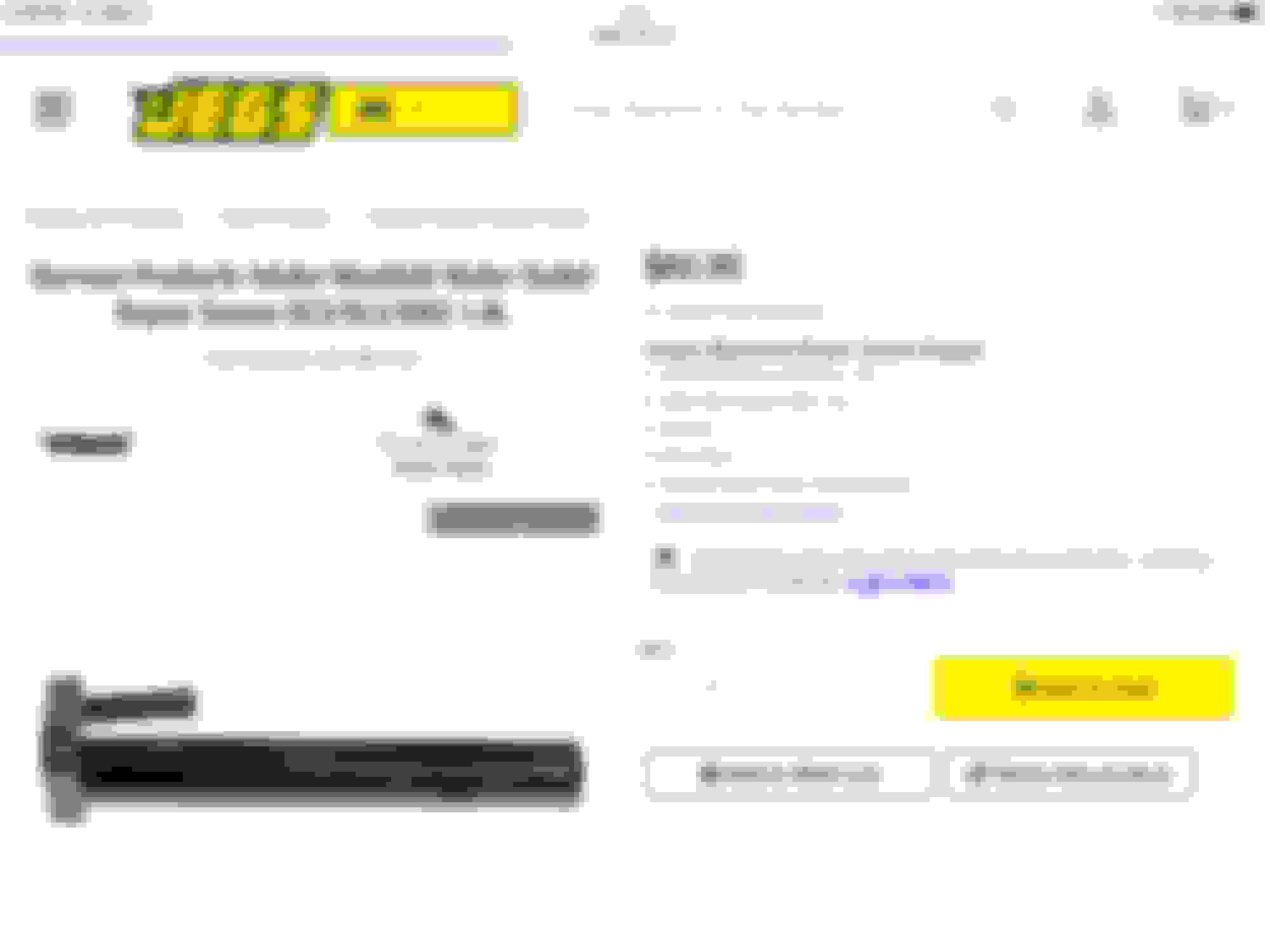
That looks like the tube that breaks on the intake manifold. The tube is available as a repair piece from Dorman. It is a chore to install but you don’t have to replace the complete intake manifold.
So I have a coolant leak coming from the back of my 2002 Saturn sl2 with a 1.9 and I thought the leak was coming from the hose connected to this pipe, I’m not sure what this pipe is called but I’d like to replace it before it gets worse, any help is appreciated
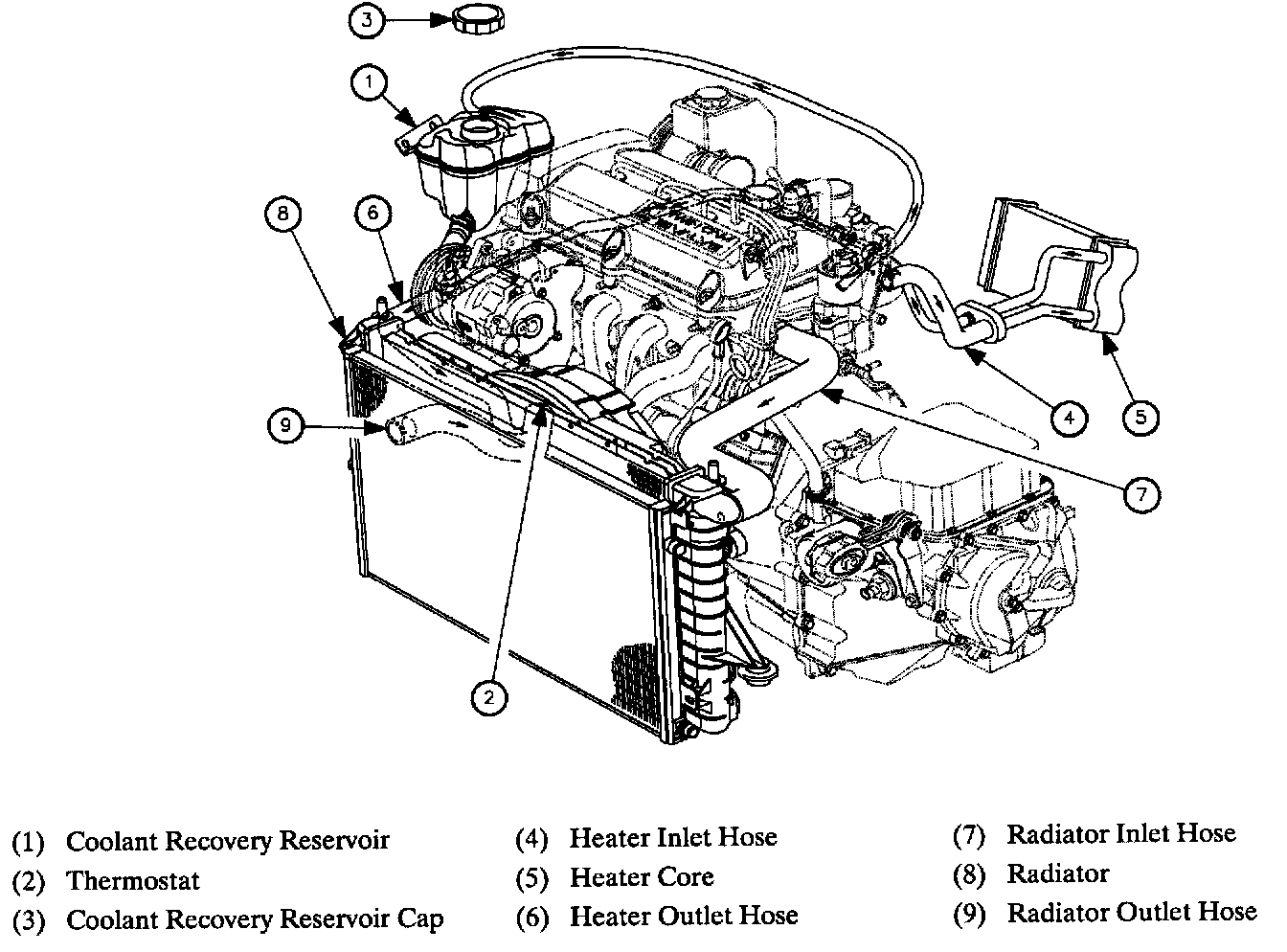
The Saturn cooling system has two unique features, a coolant recovery reservoir and an inlet side thermostat. The system is filled through the pressure cap and doesn't require any bleeding. Flow from the tank fills the engine cylinder block, radiator, heater core, and hoses.
During engine operation with the thermostat closed, coolant is pumped through the cylinder block, cylinder head, heater core inlet hose, heater core, heater outlet hose and back to the thermostat housing. Coolant flows past the thermostat element and back to the water pump inlet. Some coolant is routed back through the engine block to the thermostat cavity. A thermostat by-pass valve controls return coolant flow through the cylinder block and dampens sudden coolant pressure surges by venting coolant back to the water pump suction side.
When the thermostat begins to open the by-pass valve begins to close the cylinder block passage. Coolant flow is then routed from the pump through the cylinder block, head, heater inlet, heater core, heater outlet and back to the cylinder block. Coolant is also routed through the upper radiator hose, radiator core, lower or outlet radiator hose past the thermostat to the water pump. Coolant flow from the heater return and lower radiator hose wash the thermostat element, thus regulating coolant flow through the lower radiator hose and to the water pump.
IMPORTANT: During extremely cold weather, 10° F (-12° C) or colder, the engine's coolant temperature will decrease quickly when idling with the the heater fan on high speed, and cool air may flow from the heater outlets. The fan control switch should be set at a slower speed position (fan speed I or II) to maintain the hottest air flow.
The Saturn cooling system is filled with Dex-Cool(TM), a non phosphate, silicate free ethylene glycol-based antifreeze recommended for aluminum engine protection and increased water pump seal life.
Our latest 2002 SC2 had the same problem. The previous "mechanic" had botched the fix with pipe and JB Weld.
Rather than trying to fix his fix - I opted.for a new intake manifold.
$250 later I had a new manifold ordered via internet. I worked in an injection molding shop for a number of years and can appreciate a good mold. This manifold's molding die was an impressive bit of work. It is one of the most complicated bits of injection molding I have seen..
Has anyone managed to install this in-vehicle?
Not really wild about the idea of removing the intake manifold, much less the whole head. Surely something else will break in the process.
Yeah I figured taking the whole head off was a bit extreme....
Was just going by the Dorman vid on YT, where of course they used just an intake on a head to demonstrate.
I would like to report that with an abundance of caution, it is possible to do in-vehicle. I used a Dremel with a saw blade and sanding drum attachments, oscillating tool with a straight blade, regular old hacksaw (the kind where the blade sticks out from the handle), utility knife and screwdriver for those pieces the just wont let go. The oscillating tool was essential, with the straight blade to get to the mating face of the intake which is under the valve cover. I found
Didn't want another plastic part so I made this...........
Works fine
After finishing the job I realized I could have just cut off the tube at the split and clamped the hose or an extension on it



 Coolant leak(2002 sl2, 1.9)